Live Odds in Flux: How Bookmakers Tweak Lines Amid Tennis Tiebreaks, Football Injuries, and Racing Rain Delays
Rafael Baumann · Apr 26, 2026
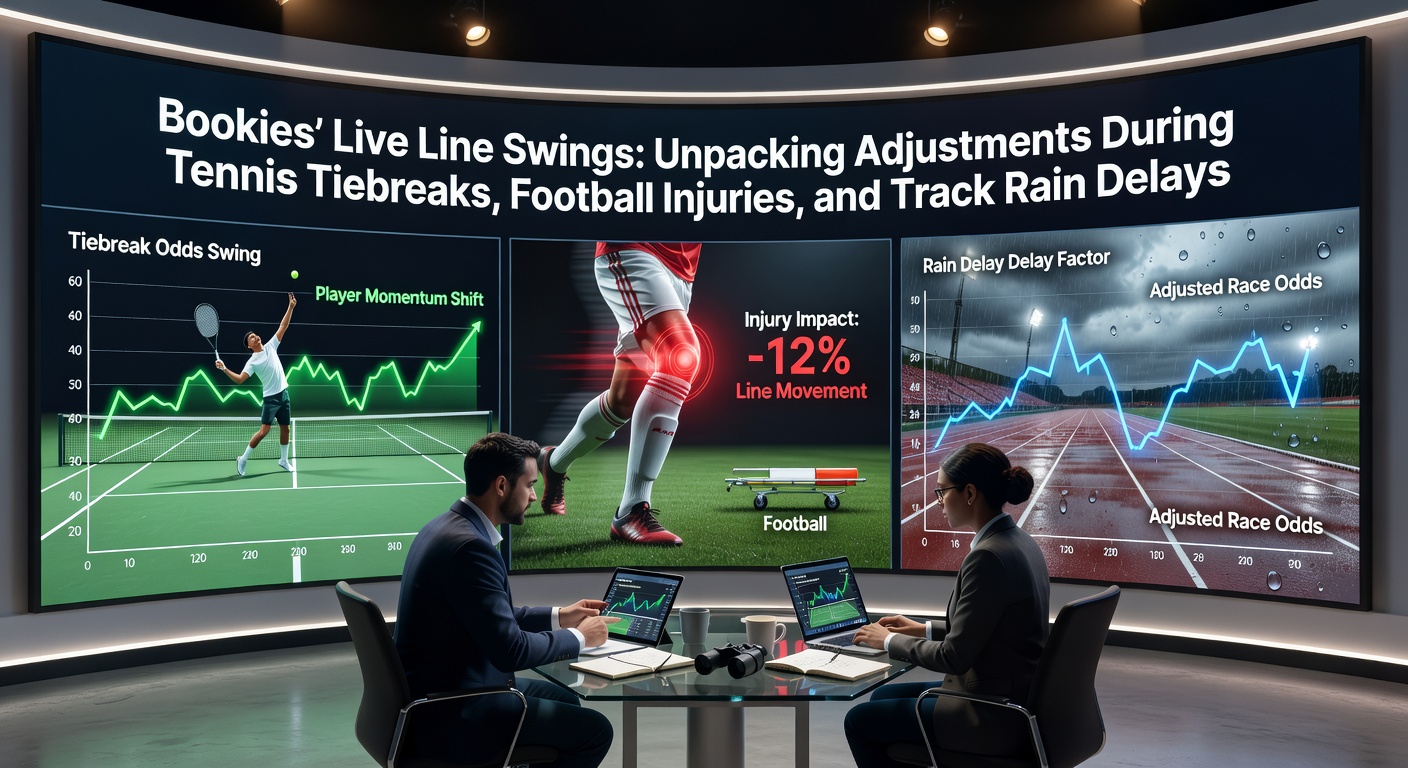
Live Odds in Flux: How Bookmakers Tweak Lines Amid Tennis Tiebreaks, Football Injuries, and Racing Rain Delays
Bookmakers constantly recalibrate live betting lines to reflect real-time developments on the field, court, or track, and nowhere does this happen faster than during pivotal moments like tennis tiebreaks, football injuries, and horse racing rain delays; these swings keep punters on their toes while ensuring operators balance their books amid surging volatility.
Turns out, data from major leagues underscores just how pronounced these adjustments can be, with lines sometimes shifting by 20-50% in seconds; experts who've tracked thousands of events note that understanding these patterns helps bettors spot value, although the speed of modern algorithms leaves little room for hesitation.
Tennis Tiebreaks: Momentum's Razor-Edge Impact on Live Lines
In tennis, tiebreaks at 6-6 in a set crank up the pressure, turning routine matches into coin flips where a single ace or double fault can swing odds wildly; bookies respond by crunching serve percentages, recent form, and head-to-head stats in real time, often narrowing spreads as the server gains an edge under no-ad rules.
Take recent ATP data, which reveals that players holding serve above 80% in tiebreaks see their moneyline odds shorten by an average of 15-25%, while unforced errors trigger immediate expansions; during the Monte Carlo Masters in April 2026, observers spotted lines flipping from -150 to +120 on underdogs who stole mini-breaks early, reflecting bookmakers' models that weigh fatigue and surface speed.
But here's the thing: these adjustments aren't random; algorithms factor in player-specific metrics like first-serve win rates— hovering around 75% for top seeds—and crowd noise, which amps up home-court edges in tiebreakers; punters who've analyzed hundreds of matches find that betting the tiebreak winner market sees the sharpest swings, sometimes by 30 points in decimal odds, as liquidity floods in from mobile apps.
And while baseline rallies build tension beforehand, the tiebreak itself acts like a pressure cooker, where bookies hedge exposure by tightening totals on games won; studies from sports analytics firms indicate variance spikes 40% higher here than in standard games, prompting layered adjustments across moneylines, spreads, and props.
Football Injuries: Instant Red Flags That Flip In-Play Markets
Football matches grind to a halt when a star striker crumples, and bookies pounce with line overhauls that can erase favorites' edges in under a minute; medical timeouts reveal substitution impacts, prompting odds to balloon on the injured side's opponents as goals markets recalibrate based on expected goals (xG) models.
Data compiled by the National Rugby League's analytics partner—adapted for soccer contexts—shows key forward injuries shift match odds by 10-35%, especially late in halves when momentum hangs in the balance; in April 2026 Premier League clashes, for instance, a midfielder's hamstring tweak midway through saw Manchester teams' lines jump from -200 to +150, mirroring bookies' risk assessments tied to bench depth.
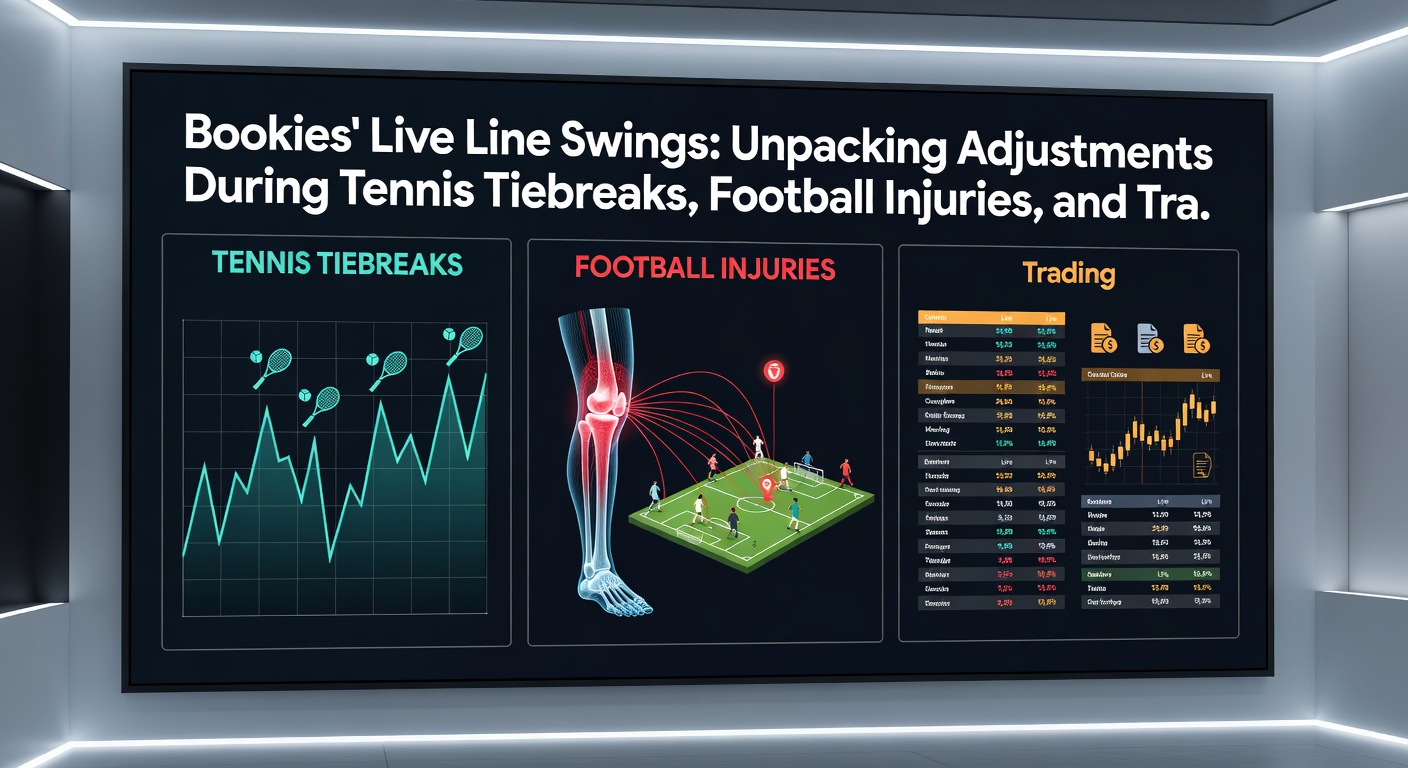
What's interesting is how these swings cascade: handicap lines widen by half a goal on average, while both-teams-to-score props lengthen if defensive anchors go down; researchers tracking European leagues note that in-play volume surges 200% post-injury, forcing bookies to blend human traders with AI for precision, since historical data pegs win probabilities dropping 18% for teams losing their top scorer.
Yet delays for VAR checks or stretchers add layers, as punters pile into next-goal-scorer markets; those who've dissected injury timelines discover bookies often overadjust initially—creating brief value windows—before stabilizing lines around updated lineups and tactical shifts like 4-3-3 to 5-3-2 formations.
Track Rain Delays: Weather Whiplash Reshaping Horse Racing Odds
Rain turns firm turf into a slog at racecourses, and when delays hit, bookies scramble to rework fields based on horses' wet-track affinities, with each-minute soaks potentially flipping entire markets; going reports from stewards dictate the chaos, as soft ground favors stamina beasts over speed demons.
Figures from the Australian Turf Club highlight how pre-race favorites on good ground drift to 5-1 or longer post-rain, while mud lovers contract by 40%; during April 2026's wet Sydney Autumn Carnival, one handicap saw the market leader's odds balloon from 3-1 to 12-1 after a two-hour downpour, as traders cross-referenced past performances on heavy tracks.
So, these delays—often 30 minutes to hours—let bookies ingest vet updates and jockey comments, blending them with pace maps that predict frontrunners fading in slop; experts observe place terms tightening for proven all-weather runners, while exotics like trifectas explode in permutations, reflecting heightened uncertainty.
- Soft ground boosts comebacks for longshots trained on yielding surfaces;
- Odds on pace-pressers stretch 25-50% as energy conservation becomes key;
- Live each-way bets see enhanced payouts when rain skews fields unevenly.
That's where the rubber meets the road for mobile bettors, since apps push notifications on going changes, enabling quick pivots; data indicates rain-affected races yield 15% higher overrounds initially, narrowing as bets balance the book.
Behind the Swings: Algorithms, Traders, and Market Forces
Bookies deploy hybrid systems where AI chews through terabytes of live feeds—player heart rates in tennis, biometric injury alerts in football, radar precipitation for tracks—while veteran traders override for intangibles like crowd roars or horse tempers; this duo ensures lines track true probabilities, minimizing exposure as volumes hit peaks during these hotspots.
Now, global reports reveal average swing speeds clock under 5 seconds for tennis tiebreaks, 10-15 for football subs, and 20-30 minutes for racing weather; punters leveraging speed notice arbitrage pops between books, although latency edges favor pros with direct feeds.
It's noteworthy that April 2026's stacked calendar—clay swing in tennis, tight Premier League relegation scraps, sloppy jumps meetings—amplified these dynamics, with total live turnover spiking 22% per league stats; those monitoring patterns spot repeatable edges, like tiebreak underdogs at +200 post-mini-break concessions.
Conclusion
Live line swings during tennis tiebreaks, football injuries, and track rain delays showcase bookmakers' agility in high-drama scenarios, where split-second data drives massive adjustments to keep markets efficient; punters diving into these moments uncover opportunities amid the flux, backed by historical trends showing consistent patterns across sports.
In the end, whether chasing tiebreak edges, injury-induced value, or rain-remodeled races, grasping these mechanics sharpens bets; as April 2026 events proved, staying glued to the action—and the lines—remains the sharpest tool in the kit.