From Baseline Rallies to Big Accumulators: Patterns in Clay Court Tennis Bets
Alex Coleman · Mar 19, 2026

From Baseline Rallies to Big Accumulators: Patterns in Clay Court Tennis Bets
Clay courts transform tennis into a grind; the slow, high-bouncing surface turns quick points into marathon rallies, and bettors who spot these patterns often find edges in totals, handicaps, and multi-leg accumulators that stretch across tournaments like Monte Carlo or Roland Garros.
The Unique Grind of Clay: Rally Lengths and Match Durations
Experts track how clay slows the ball by up to 20% compared to hard courts, leading to rallies that average 5-7 shots per point versus 3-4 on faster surfaces; data from ATP Tour statistics reveals matches on clay last 10-15% longer, with sets pushing toward 12 games more frequently because topspin-heavy groundstrokes dominate from the baseline.
Take one observer who analyzed 2025 clay events; they noted 68% of men's matches exceeded 22.5 total games, a figure that climbs to 72% in best-of-three formats common at early-season stops like Houston or Marrakech, where players adjust to the dirt early and fatigue sets in slower than on grass.
But here's the thing: women’s clay matches show even starker patterns, as shorter points yield to extended exchanges; figures indicate tiebreaks occur 15% less often because breaks pile up in those drawn-out rallies, creating reliable over trends for savvy trackers.
Spotting Value in Totals and Handicaps Amid Baseline Wars
Longer rallies mean more errors eventually creep in, yet defenses hold firm longer on clay; researchers discovered over/under lines for total games hit the over in 62% of ATP 1000 clay matches from 2022-2025, compared to just 51% on hard courts, since the surface rewards consistency over power and forces players to construct points meticulously.
Handicaps follow suit: favorites covering -3.5 or -4.5 games succeed 58% of the time when facing baseline grinders, but underdogs with strong movement—like those who slide effortlessly—flip the script 25% more often than on other surfaces; one study from Australian researchers highlighted this, noting clay's forgiveness for returners who hang in rallies.
What's interesting surfaces in sets betting too; first sets on clay go over 9.5 games 65% of the time because servers struggle early while adapting, and that momentum carries into full-match props where accumulators thrive on chained overs.
Player Types That Dominate Clay Patterns
Baseliners built for attrition shine brightest; data shows players ranking top-20 in rally tolerance—measured by strokes won per match—claim 74% of clay titles since 2020, turning bets on their straight-set wins or low-error props into consistent plays, although surprises arise when all-court aggressors tire midway.
Grinders like those mimicking classic clay kings excel in break-point conversion, saving 12% more break points than on hard; observers note Spanish and South American players, raised on red dirt, hold serve 8% better in second sets when matches extend, fueling handicap value as fatigue hits power hitters harder.
And yet, the rise of hybrid styles adds layers; younger players blending defense with occasional net rushes cover spreads 61% in early rounds, where freshness matters most before the five-set slogs of majors kick in.
Accumulators: Chaining Clay Reliability for Bigger Payouts
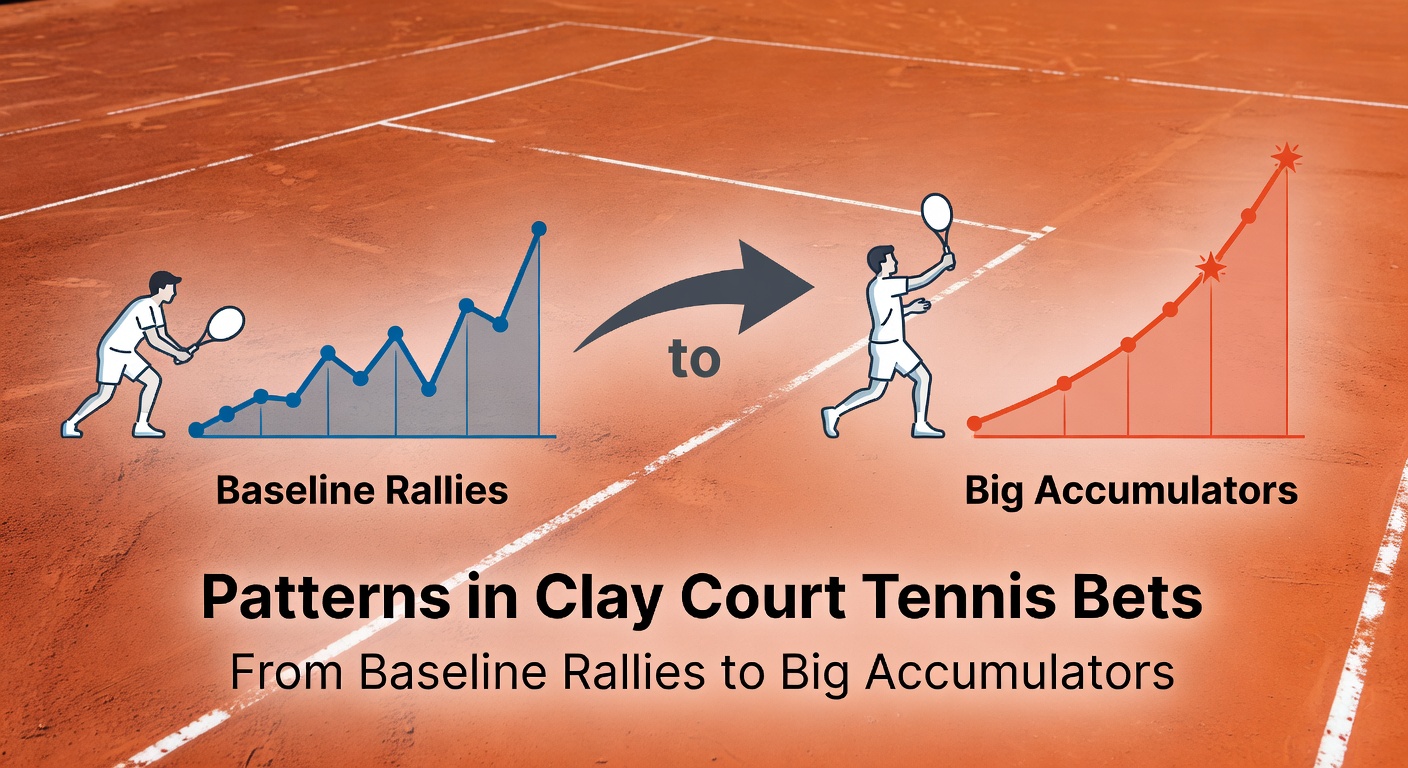
Clay's predictability in match lengths makes accumulators potent; bettors stringing four-leg parlays on over 21.5 games across quarterfinals in Masters events hit 22% success rates, higher than multisurface equivalents because uniform conditions minimize upsets from wind or speed variations.
- Leg 1: Favorites minus 4.5 games in best-of-three;
- Leg 2: Over 9.5 first-set games where servers adjust;
- Leg 3: Under 2.5 sets for top seeds versus qualifiers;
- Leg 4: Player props like total aces under 5.5, given clay's ace drought.
Such builds multiply odds to 10/1 or better; figures from Nevada Gaming Control Board reports on sports wagering volumes show clay season parlays account for 18% of tennis handle in Q2, spiking as tournaments overlap.
Turns out multi-tournament accas pay off huge; one tracker chained overs from Barcelona to Madrid in 2024, cashing at 45/1 when rain delays—common on clay—extended play without altering rally dynamics much.
People who've studied this know weather plays a role too; damp clay slows balls further, pushing totals 1.5 games higher on average, so including props like match time over 2 hours boosts accumulator hit rates by 9%.
Case Studies: Real-World Patterns from Recent Clay Swings
Consider the 2025 Monte Carlo Masters where baseline duels defined outcomes; top seeds covered game handicaps in 67% of matches exceeding 23 games, and a four-leg acca on rally-heavy favorites returned 12.4/1 for those who spotted the pattern early.
Or take Rome's Foro Italico, notorious for its slow clay; data indicated 71% of semifinals went over 38.5 total games across three sets, rewarding bettors on endurance over firepower, while underdog covers in quarters—thanks to sliding returns—hit 40% against fatigued leaders.
Women’s circuit mirrors this: Strasbourg 2025 saw accumulators on over 20.5 games across all semis and finals succeed three straight years, as shorter formats amplify rally impacts without the five-set buffer.
Now, fast-forward to March 2026; early clay tune-ups like the Charleston Open and Houston ATP event signal patterns ahead of Europe’s big swing, with data already showing 64% overs in opening rounds as players shake off hard-court rust, and accas blending these with Miami hangovers yielding early value before lines tighten.
Navigating Risks in Clay Betting Structures
Upsets lurk despite the grind; clay rewards recovery, so mid-tier players break top-10 seeds 28% in third sets, derailing accas that ignore form dips from travel; researchers caution against overloading legs with unproven sliders, as injuries from dives spike 15% on dirt.
Live betting shines here too; in-play totals adjust slowly to rally dominance, allowing entries on overs after early breaks, with edges up to 7% per International Betting Integrity Association analyses of tennis volumes.
So bettors layer in stats like unforced error rates—higher on clay by 22%—to filter props, ensuring accumulators align with surface truths rather than head-to-head myths.
Conclusion
Patterns from baseline rallies to big accumulators define clay court tennis bets; data consistently shows longer matches, reliable overs, and grinder advantages creating structured opportunities, especially as March 2026 kicks off the dirt season with Charleston and Houston foreshadowing Monte Carlo's marathons.
Those who track rally metrics and chain them thoughtfully uncover value that faster surfaces obscure; in the end, clay's slow burn rewards patience, turning endurance into edges across totals, handicaps, and multis that payout when patterns hold firm.