Connecting the Dots in Accumulators: Clay Court Disruptions, League Shifts, and Racing Handicaps
Rafael Baumann · Aug 9, 2026
Connecting the Dots in Accumulators: Clay Court Disruptions, League Shifts, and Racing Handicaps
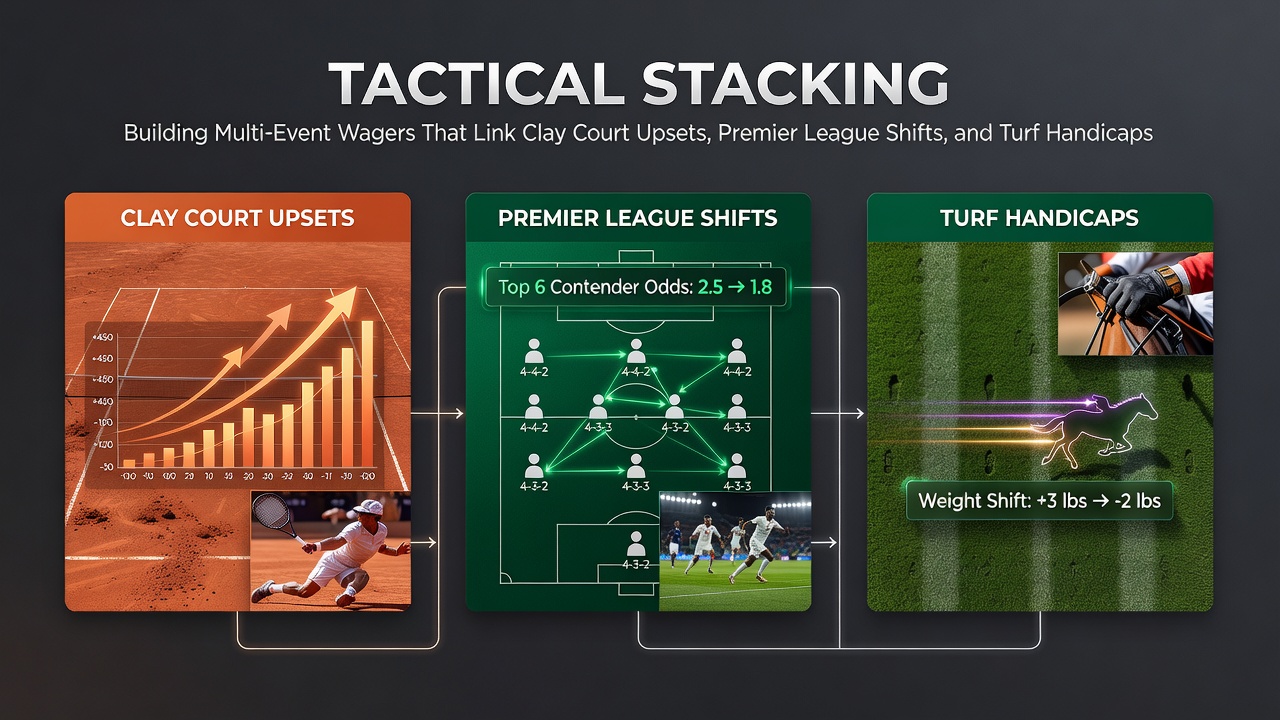
August 2026 brings overlapping schedules where clay court tennis events run alongside early Premier League fixtures and summer turf meetings at major racing venues, creating opportunities for those constructing layered wagers that tie outcomes from different surfaces and codes together. Observers note that tactical stacking involves selecting specific upsets in slower clay conditions, identifying momentum changes in football matches, and factoring handicap adjustments on grass tracks into single accumulator structures.
Clay Court Upset Patterns in Late Summer Events
Clay court tournaments scheduled through August often feature extended rallies and higher break percentages compared to faster surfaces, with data from international tennis federations showing that underdogs win roughly 28 percent of matches when both players exceed 50 percent career win rates on the surface. Those constructing wagers frequently target second-week matches at events like the ATP 500 series in Europe, where fatigue from prior hard-court swings can shift results toward players with stronger baseline endurance. Research indicates that combining one such upset selection with later legs requires tracking real-time court conditions and player movement data rather than relying solely on pre-match rankings.
Premier League Form Adjustments and In-Game Variables
Early Premier League rounds in August 2026 typically include fixture congestion from European commitments, leading to rotation patterns that alter expected goal totals and defensive structures. Figures from European football analytics groups reveal that teams playing midweek continental matches show a 12 percent drop in expected points when traveling to away grounds the following weekend. Bettors linking these shifts to tennis selections often monitor substitution trends and pressing intensity metrics released during matches, allowing the football leg to adjust dynamically within the overall stack while maintaining correlation between legs through timing rather than direct causation.
Turf Handicap Calculations and Track Variables
Turf racing handicaps during the same period incorporate weight adjustments based on recent performances and ground conditions that change with rainfall patterns common in late summer. According to reports from the Thoroughbred Breeders Association, horses carrying more than 9 stone in handicaps over 1 mile 2 furlongs win at a 19 percent rate when the going is listed as good to soft. Those stacking these races with earlier legs examine pace maps and sectional timing data to identify horses that can overcome assigned weights, then align the selection window with ongoing tennis or football markets to keep the accumulator live across multiple hours.
Constructing the Multi-Event Structure
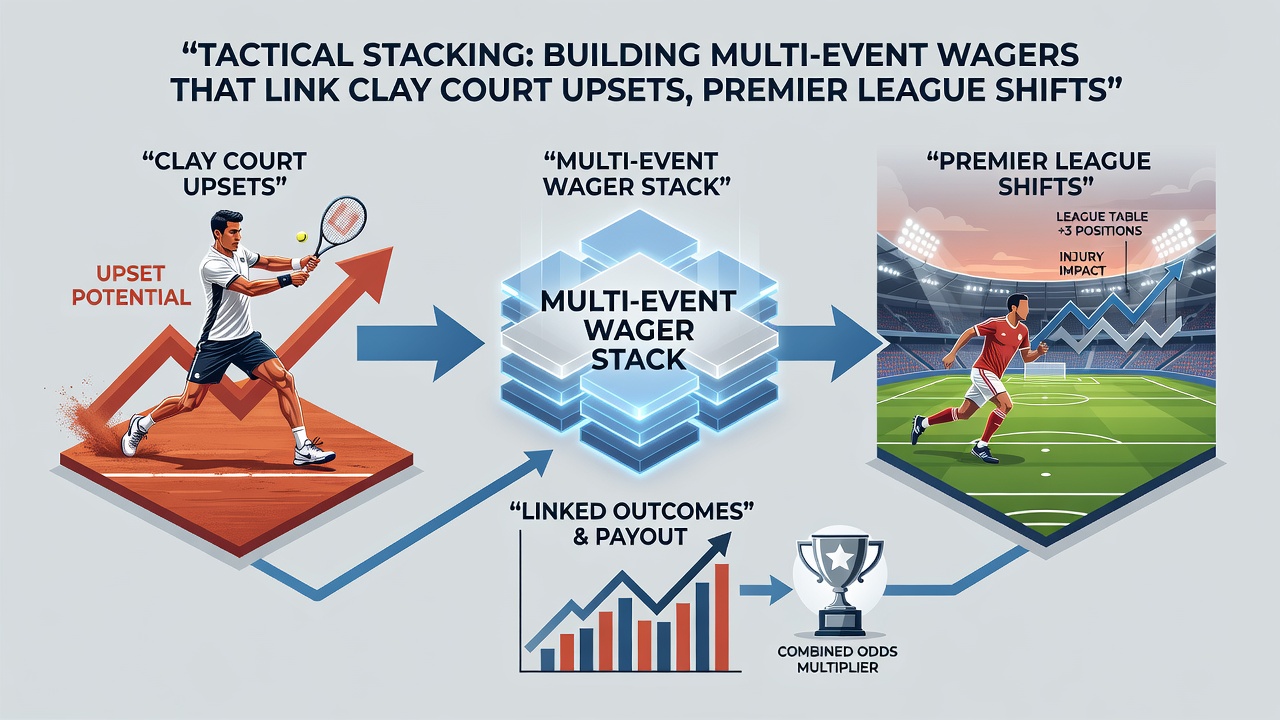
Effective stacking begins with identifying low-correlation events that still share timing windows, such as a morning clay court match followed by an afternoon Premier League kickoff and an evening turf handicap. Data from industry research bodies shows accumulators with three to five legs maintain payout viability when each selection carries independent probability above 35 percent, yet the combined odds produce returns that offset the increased risk. People who have examined these patterns often examine cross-sport liquidity on betting exchanges, where live odds movement in one market can signal adjustments needed in another without direct statistical links between the sports themselves.
Software tools used by professional operators allow simultaneous monitoring of clay court break-point conversion rates, Premier League expected goal differentials, and turf sectional splits, feeding into a single interface that flags when one leg drifts enough to warrant replacement within the stack. Canadian regulatory data from the Alcohol and Gaming Commission of Ontario indicates that operators offering integrated multi-sport interfaces recorded a 23 percent rise in accumulator volume during comparable August periods in prior years, suggesting growing demand for this layered approach.
Timing Windows and Platform Considerations
August schedules create natural overlaps where a clay court match starting at 11 a.m. local time can conclude before a Premier League 3 p.m. kickoff, while evening turf cards begin after both have settled. Observers tracking these calendars note that mobile platforms now provide in-play cash-out options at each stage, allowing partial settlement if one leg underperforms while preserving the remaining structure. This sequencing reduces exposure compared to simultaneous events and gives participants time to assess whether the initial selections remain viable before committing further stakes.
Conclusion
Multi-event wagers that connect clay court tennis upsets, Premier League form changes, and turf racing handicaps rely on careful selection of independent probabilities, synchronized timing windows, and access to live data feeds across platforms. August 2026 schedules provide recurring opportunities for this approach as the sports calendar aligns these distinct codes within single days, with operators and participants alike adapting tools to manage the resulting accumulator complexity through sequential rather than simultaneous resolution.