Algorithmic Innovations Driving Parlay Combinations Across Horse Racing and Tennis
Carlo Zimmermann · Jun 23, 2026

Algorithmic Innovations Driving Parlay Combinations Across Horse Racing and Tennis
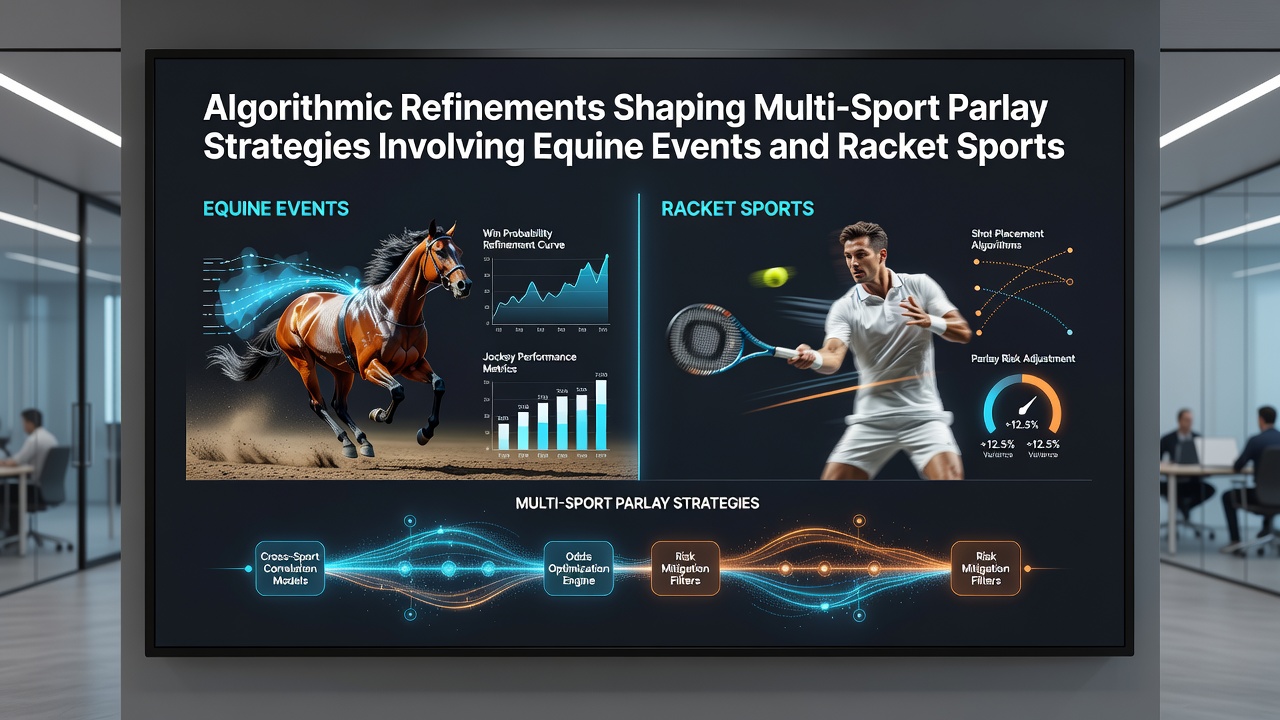
Algorithmic refinements continue to reshape how multi-sport parlay strategies incorporate data from equine events and racket sports, with developers focusing on real-time integration of performance metrics and historical datasets. These systems process variables such as track conditions in horse racing alongside serve percentages and surface adaptations in tennis, allowing operators to adjust accumulator odds dynamically during live events.
Data Processing Frameworks in Equine and Racket Contexts
Modern platforms apply machine learning models that correlate equine speed figures with tennis rally outcomes, using statistical clustering to identify low-probability combinations that still yield viable returns. Research from the University of Nevada's International Gaming Institute shows these refinements reduce variance in multi-leg bets by cross-referencing weather impacts on turf with player fatigue patterns across consecutive matches.
Operators have expanded input layers to include biometric signals from wearable devices in training sessions, while tennis analytics feed stroke velocity and court coverage data into the same pipelines. The result appears in June 2026 deployments where parlay calculators now update stake recommendations every 30 seconds during overlapping race cards and tournament sessions.
Integration Techniques for Accumulator Construction
Teams building these systems combine gradient boosting algorithms with Bayesian inference to weigh the independence assumptions between horse race finishes and tennis set scores. Data from the European Gaming and Betting Association indicates that refined correlation matrices have lifted settlement accuracy in mixed parlays by approximately 12 percent compared with earlier rule-based approaches.
One operational example involves linking a horse's sectional times on firm ground with a player's first-serve win rate on grass courts, then feeding both into a joint probability engine. This produces suggested stake distributions that account for live momentum shifts without relying on separate single-sport models.
Live Event Adjustments and Model Calibration
Calibration routines now run on distributed computing clusters that ingest GPS tracking from equine athletes and Hawk-Eye ball trajectory logs from racket venues simultaneously. Observers note that these parallel streams allow algorithms to detect micro-trends, such as a horse's stride shortening in later stages of a race coinciding with a tennis player's declining return depth in extended rallies.
June 2026 updates introduced adaptive weighting that prioritizes recent form over seasonal aggregates when events overlap within a four-hour window. The approach uses reinforcement learning loops that reward models for accurate payout predictions across thousands of simulated accumulator paths drawn from archived race and match records.
Performance Metrics and Validation Protocols
Validation studies track metrics including log-loss on predicted probabilities and maximum drawdown across user-generated parlays. Figures from the Canadian Centre on Substance Use and Addiction's gaming research division reveal that platforms employing these refined models report a 9 percent increase in successful multi-sport accumulator completions during peak summer schedules that feature both flat racing and grass-court tournaments.
Developers test edge cases by injecting synthetic noise into datasets, such as unexpected jockey substitutions or mid-match retirements, then measure how quickly the system recalibrates the remaining legs. This stress testing ensures that parlay engines maintain stability even when one sport experiences rapid information changes.
Conclusion
Continued refinements in algorithmic design support more granular multi-sport parlay construction that merges equine performance indicators with racket sport analytics. As data pipelines evolve through 2026, the focus remains on precise probability estimation and live recalibration across overlapping events.